
Quick answer
Book a checkup within your first week home, or right away if your new cat seems sick. Bring the shelter or rescue records (vaccines, deworming, test results, microchip number), your cat’s food details and a list of questions, with your cat in a secure carrier. Expect a nose-to-tail exam, a parasite check, possibly a FeLV/FIV test, and the next round of vaccines. The cost depends on what’s done that day, so ask for an estimate when you book.
The first vet visit is one of the most important things you’ll do in your new cat’s first week. It gives you a baseline for your cat’s health, catches the colds and parasites that are common after a shelter stay, and sets up the rest of the vaccine series.
It’s also a little nerve-racking if you’ve never done it. Here’s what to bring, what the vet will actually do, and how to think about the bill.
When should your new cat see the vet?
The American Animal Hospital Association (AAHA) says to schedule a kitten’s first veterinary visit within the first week at home. The Cornell Feline Health Center agrees that any new cat should be checked by a veterinarian as soon as possible after coming home, kitten or adult.
- Kittens: Cornell says kittens should first see a vet at about six weeks old, or sooner if they show signs of illness, then return every two to three weeks for exams and vaccines until their first vaccine series is done at about 16 weeks. Most adopted kittens are older than six weeks, so your vet will pick up wherever the shelter left off.
- Adult cats: Cornell recommends a yearly visit until about age 10, then twice a year for seniors. The first visit after adoption sets the baseline.
- Sick on day one? Don’t wait for the first-week appointment. Call the clinic, and if it’s after hours or serious, go to a 24-hour emergency vet.
If you already have cats, Cornell advises keeping the newcomer separated from them until your vet has examined the new cat, especially if its health history isn’t known. Our guide to introducing a new cat to your resident cat explains how to set up that separate space.
What should you bring to the first vet visit?
- A sturdy, secure carrier, ideally one with a top and a front opening. Cat Friendly Homes, run by the American Association of Feline Practitioners (AAFP), notes that many cats feel calmer staying in the bottom half of the carrier during the exam.
- A towel or blanket that smells like home, to line the carrier and to drape over it on the way.
- Every record from the shelter or rescue: vaccine names and dates, deworming and flea treatments, FeLV/FIV test results, spay/neuter status and the microchip number. Cornell suggests asking the shelter about prior vaccinations, nutrition and parasite control when you adopt.
- Your cat’s food details: the brand, how much, and how often. The 2021 AAHA/AAFP life stage guidelines say a diet review belongs in every visit.
- A list of any medicines or supplements your cat is on, with doses.
- Notes on the first few days: appetite, litter box habits, sneezing, hiding, and anything that worries you. AAHA notes cats often hide pain, so small changes are worth writing down.
- A stool sample, if the clinic wants one. Cornell says all cats, and especially kittens, should be checked for intestinal parasites with a fecal test. Ask when you book whether to bring a fresh sample.
- Your questions (see our list below) and your cat’s favorite treats.
Our new kitten checklist lists the paperwork to collect on adoption day, so you have everything in one folder before the appointment.
How do you get a nervous cat to the vet calmly?
Most cats only see their carrier on the way to the vet, so they learn to dread it. Cat Friendly Homes recommends a few simple habits:
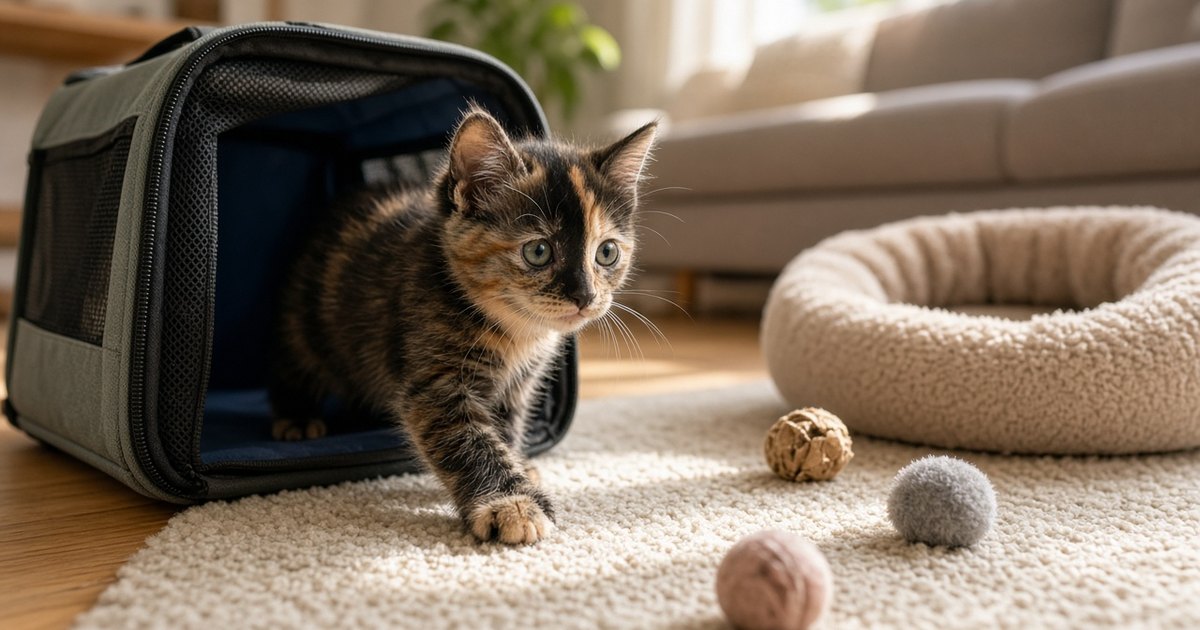
- Leave the carrier out in a room your cat uses, with soft bedding and treats or toys inside, so it becomes a normal hiding spot.
- Don’t chase. If your cat isn’t used to the carrier yet, close yourselves in a small room with few hiding spots, move slowly, and use treats. With a top-opening carrier you can gently lower your cat in, or take off the top half and replace it once your cat is inside.
- Carry it with both arms, supporting the bottom, instead of swinging it by the handle. One cat per carrier.
- Cover the carrier with a towel during the trip to block out the changing view.
- Put the carrier on the floor behind a front seat. The Center for Pet Safety recommends belting a carrier into the back seat only if it has been crash-tested. Never let your cat roam loose in the car.
- Very anxious cat? Ask your vet ahead of time about medication to help your cat stay calm before the visit.
If you have other cats, your returning cat may smell unfamiliar to them for a while. Cat Friendly Homes suggests leaving the returning cat in the carrier for a few minutes to see how the others react, and keeping them apart for a bit if there’s hissing.

What happens during the first vet exam?
Every clinic runs things a little differently, but based on AAHA and Cornell guidance, a first visit usually covers these steps.
- History. The team will ask about where your cat came from, past medical care, medicines and diet. This is where the shelter records pay off.
- A nose-to-tail physical exam. For kittens, AAHA says the vet checks for congenital concerns such as a heart murmur, hernia or cleft palate, and the AAHA/AAFP guidelines call for a detailed look at the mouth and teeth.
- Parasite checks. The vet will look for fleas and other external parasites and may run a fecal test for intestinal worms, then recommend treatment and prevention.
- FeLV and FIV testing if your cat’s history is unknown or the shelter didn’t test. Cornell says cats with an unknown health history should be tested for both viruses. AAHA notes the results help guide how your cat interacts with other cats.
- Vaccines. Your vet will start or continue the core vaccine series and give you dates for boosters. Our kitten vaccine schedule explains which shots come when.
- Microchip. AAHA recommends microchipping during the first visit or soon after. If your cat already has a chip from the shelter, ask the clinic to scan it and confirm the number matches your paperwork.
- A plan for the months ahead. Expect to talk about spay/neuter timing (AAHA recommends scheduling it before 5 months of age if it hasn’t been done), parasite prevention, feeding, litter box setup, and getting your cat used to handling and the carrier.
The 2021 AAHA/AAFP life stage guidelines encourage clinics to make a kitten’s first visit a positive one, with gentle handling, toys and treats to distract from less pleasant moments like vaccines. Don’t be surprised if the team offers your kitten snacks during the exam.
What does a first vet visit cost?
There isn’t one national price. What you pay depends on your area, the type of clinic, and what your cat needs that day. The bill is usually built from some mix of these parts:
- The exam (office visit) fee
- Any vaccines that are due
- FeLV/FIV testing, if the shelter didn’t do it
- A fecal test and deworming
- Flea treatment or other parasite prevention
- A microchip, if your cat doesn’t have one
- Treatment for anything the vet finds, such as an upper respiratory infection
For a rough national benchmark, the ASPCA’s pet care cost table, which it labels a 2021 update, estimates about $175 in initial medical costs (vaccines, etc.) for a cat and about $160 a year in routine medical costs such as vaccines and wellness visits (figures shown on the ASPCA’s website as of November 2026). Those numbers are several years old, so treat them as a starting point, not a quote.
Nonprofit clinics can cost less. As of November 2026, per Michigan Humane’s website, its Grosfeld Veterinary Clinic in Detroit takes a $45 deposit to book a wellness appointment and notes that the full cost varies depending on services.
How can you keep the cost down?
- Bring the shelter records so your vet can skip anything already done and continue the vaccine series where it left off.
- Ask for a written estimate when you book and before any extra tests or treatments.
- Compare clinics. The ASPCA suggests shopping veterinary practices by comparing fees for preventive care.
- Look at nonprofit and low-cost clinics. Our Cat Care Near Me directory lists hand-checked low-cost vets, vaccine clinics and spay/neuter programs by city, starting with Detroit and New York City.
- Don’t skip the visit to save money. The ASPCA points out it’s much more expensive to treat illnesses than to prevent them.
Budgeting for your first year?
Our kitten cost breakdown covers adoption fees, startup supplies and ongoing costs, and our low-cost cat care directory can help when money is tight.
What questions should you ask the vet?
- Which vaccines does my cat still need, and on what dates?
- Was anything found today that we need to treat or watch?
- What parasite prevention do you recommend for an indoor (or outdoor) cat?
- What and how much should my cat eat right now?
- When should we schedule spay or neuter, if it isn’t done?
- Is the microchip working, and is it registered to me?
- Which signs mean I should call you right away?
- Who do I call after hours, and where is the nearest 24-hour emergency vet?
What if your new cat seems sick before the appointment?
Shelter cats often go home with a mild cold, but don’t guess. Cornell lists signs of illness that include loss of appetite, persistent vomiting, diarrhea, discharge from the nose or eyes, sneezing, difficulty breathing or rapid breathing, and lethargy. If you see any of these, or you’re simply unsure, call your vet. If your cat is struggling to breathe, collapses, or you suspect poisoning, go to a 24-hour emergency vet; each city care guide lists them.
How did we put this guide together?
We based this guide on published guidance from veterinary organizations: the AAHA new kitten checklist, the 2021 AAHA/AAFP Feline Life Stage Guidelines, the Cornell Feline Health Center, and the AAFP’s Cat Friendly Homes. Cost figures come only from sources we checked on November 22, 2026, and we’ve noted their dates. We don’t accept payment from clinics or brands for mentions. Read more about how we research our guides.
Frequently asked questions
How soon after adopting should I take my cat to the vet?
Within the first week at home, according to AAHA, and right away if your cat shows signs of illness. The Cornell Feline Health Center says any new cat should be checked by a veterinarian as soon as possible after coming home.
Does my cat need a vet visit if the shelter already gave vaccines?
Yes. Shelter vaccines are usually the start of a series, not the end, and a first exam also checks for parasites, congenital problems and illness. Bring the shelter records so your vet can continue the schedule instead of repeating shots.
Should I bring a stool sample to my cat’s first vet visit?
Ask the clinic when you book. Cornell says all cats, and especially kittens, should be tested for intestinal parasites with a fecal exam, and many clinics will ask you to bring a fresh sample.
Can my new cat meet my other cats before the vet visit?
It’s safer to wait. Cornell advises keeping a new cat separated from your other cats until your vet has examined it, especially if its health history is unknown.
How much does a cat’s first vet visit cost?
It depends on your area, the clinic, and what’s done (exam, vaccines, tests, parasite treatment, microchip). The ASPCA’s cost table, labeled a 2021 update, estimates about $175 for a cat’s initial medical costs. Nonprofit clinics are often cheaper; our Cat Care Near Me directory lists low-cost options by city.
This guide is general information to help you prepare. It isn’t veterinary advice. Your vet and your shelter or rescue know your cat best. Prices and clinic policies change, so confirm costs directly with your clinic.
Sources
- AAHA: New Kitten Checklist: First Vet Visit, Supplies & First-Year Care
- AAHA: 2021 AAHA/AAFP Feline Life Stage Guidelines, Life Stage Checklists
- Cornell Feline Health Center: Choosing and Caring for Your New Cat
- Cornell Feline Health Center: What to Expect When Adopting a Feline Friend (PDF)
- Cat Friendly Homes (AAFP): Getting Your Cat to the Veterinarian
- Cat Friendly Homes (AAFP): Choosing the Perfect Cat Carrier
- ASPCA: Cutting Pet Care Costs (cost table, 2021 update)
- Michigan Humane: Grosfeld Veterinary Clinic (Detroit)